
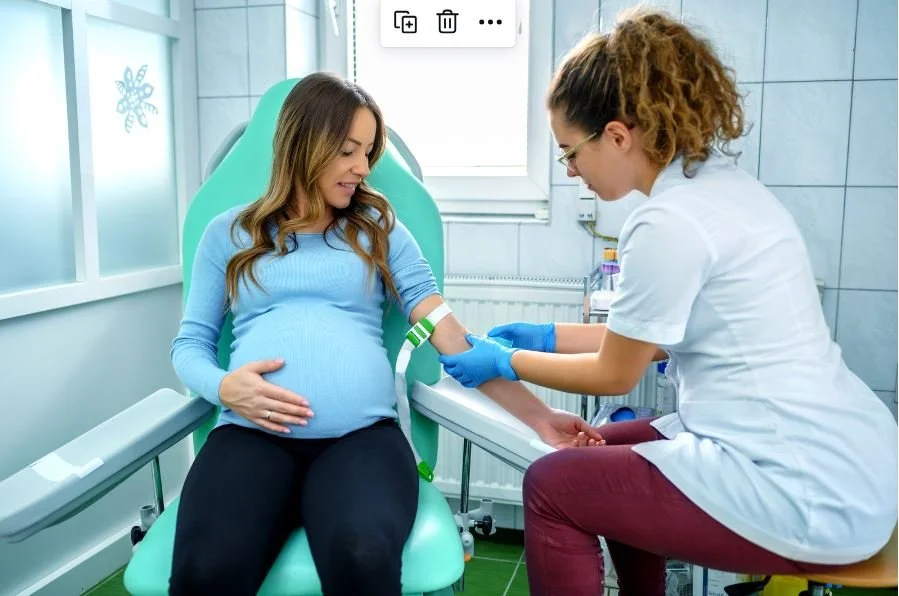
Hepatitis B Virus and Pregnancy
Hepatitis B is a serious liver infection caused by the hepatitis B virus (HBV). While there is no cure for hepatitis B, treatment is available that can manage the infection and reduce the risk of long-term health problems. A safe and effective vaccine is also available to protect against hepatitis B infection.
HBV spreads through contact with blood or other body fluids from a person with hepatitis B, including saliva, semen, and vaginal fluids. HBV can also pass from mother to baby during pregnancy and delivery. However, steps can be taken to greatly reduce the risk of infection in babies when hepatitis B is present during pregnancy.
-
Hepatitis B virus can cause a chronic (long-lasting) liver infection. The liver is a major organ that helps the body eliminate toxins and produce important proteins.
When an adult first gets hepatitis B, they may have symptoms like fever, nausea, tiredness, stomach pain, or yellowish color changes of the skin and eyes (jaundice). Most infants with hepatitis B do not show any symptoms.
In most adults with hepatitis B infection, the virus goes away without treatment. About 5% will develop chronic hepatitis B infection. Babies with hepatitis B have a much higher risk of chronic infection. Up to 90% of infants who become infected with hepatitis B during pregnancy or delivery will go on to develop chronic hepatitis B. Left untreated, about 1 in 4 children with chronic hepatitis B will eventually die of health problems related to their infection, such as liver damage, liver disease, or liver cancer.
-
HBV is spread by contact with the blood or body fluids of a person with hepatitis B. During pregnancy or at the time of delivery, the virus can also be passed to the fetus.
-
Yes. Anyone who is pregnant should be tested for hepatitis B during each pregnancy with a simple blood test.
-
A vaccine is available to protect against hepatitis B. The vaccine is recommended for all infants; children who were not vaccinated as infants; unvaccinated adults aged 19 to 59, and adults aged 60 and older with certain risk factors. The vaccine is safe to give during pregnancy.
The Society for Maternal-Fetal Medicine recommends that healthy infants whose mothers do not have hepatitis B receive their first dose of the vaccine within 24 hours of birth. Additional doses are given over the following months.
Getting the vaccine on this schedule helps protect newborns, whose immune systems are not yet fully developed, from HBV infection. Giving the vaccine to every infant after birth provides a critical safety net to prevent newborn HBV infection.
-
The main concern during pregnancy and delivery is that HBV may be passed to the fetus. The chance of this happening is related to the viral load (the amount of HBV in the bloodstream). Viral load is monitored throughout pregnancy. If the viral load is very high, treatment with antiviral medication may be recommended during pregnancy. This treatment helps lower the level of HBV in the body and decreases the chances of the virus passing to the fetus. If the viral load is low, the baby will still receive preventive treatment after delivery to prevent HBV infection.
-
Tests of liver function and viral load will be done throughout pregnancy. Referral to a maternal-fetal medicine subspecialist or hepatologist (liver specialist) or infectious diseases specialist may be recommended for specialized care. If a pregnant patient is already being treated for hepatitis B, their current medications will be reviewed to make sure they are safe during pregnancy. Tenofovir alafenamide (TAF) and tenofovir disoproxil fumarate (TDF) can be used throughout pregnancy. Entecavir (Baraclude) is not recommended for use during pregnancy.
-
A planned cesarean delivery isn’t necessary. Vaginal delivery does not increase the risk of the baby getting the virus. Certain measures will be taken at the time of delivery to decrease the risk of transmission to the baby.
-
The following steps can be taken to greatly reduce the risk of infection in babies born to those with hepatitis B:
Immediate post-birth care: Babies born to someone with hepatitis B should receive a medication called hepatitis B immunoglobulin (HBIG) and a dose of the hepatitis B vaccine within 12 hours of birth.
Completing the hepatitis B vaccine series: Babies should get all recommended doses in addition to the dose given at birth to be as protected as possible.
Testing: Babies should be tested for hepatitis B between 9 and 12 months of age. Testing can show whether the baby is immune, infected, or at risk for infection.
-
Breastfeeding is safe as long as the baby receives the hepatitis B vaccine doses on schedule and receives HBIG at birth. The virus does not pass easily through breast milk, but it can through blood. If the nipples are cracked or bleeding, the baby should not feed from that breast. Milk should be pumped and then discarded from that breast until it is healed. Breastfeeding is safe while taking antiviral medication.
-
Even with these preventive steps, about 1 in 100 babies become infected with HBV. The baby will need special care to manage the disease. Precautions should be taken in the home to prevent passing the virus to family members and close household contacts.
-
If someone in a household has hepatitis B, all family members and household contacts should be tested for hepatitis B. They should get the hepatitis B vaccine if they do not currently have hepatitis B infection and are susceptible to the virus. Family and household members should know how HBV is passed from one person to another and take the following steps to prevent its spread:
Handwashing before meals, after using the bathroom, before handling food, and following child care (such as changing diapers).
Wearing gloves when in contact with blood.
Cleaning blood and body fluid spills from surfaces quickly.
Not sharing personal care items like razors and toothbrushes.
-
Anyone with hepatitis B should be tested for hepatitis A virus (HAV) and get vaccinated if they’ve never had it before. The hepatitis A vaccine can be given during pregnancy. Hepatitis A can cause more serious liver damage in a person with hepatitis B.
Anyone with hepatitis B should avoid all alcohol, even when not pregnant.
Quick Facts
Hepatitis B infection is caused by the hepatitis B virus (HBV). HBV spreads through contact with blood or other body fluids from a person with hepatitis B. The virus can also be passed to the fetus during pregnancy or at the time of delivery.
Steps can be taken to greatly lower the risk of hepatitis B infection in a baby when hepatitis B is present during pregnancy. These include hepatitis B vaccination and giving protective antibodies within 12 hours of birth.
Hepatitis B can occur without any symptoms.
Everyone should be tested for HBV early in pregnancy.
There is no cure for hepatitis B, but antiviral medication can help decrease the risk of long-term health problems.
Having hepatitis B during pregnancy does not require a planned cesarean delivery.
Breastfeeding is possible for someone with hepatitis B as long as certain precautions are taken.
Glossary
Antiviral Medications: Drugs that treat viral infections.
Cesarean Delivery: Surgery in which a baby is delivered through a cut (incision) in the mother’s uterus
Jaundice: A yellowish coloration of the skin and whites of the eyes caused by too much bilirubin in the bloodstream.
Maternal-fetal medicine subspecialist: An obstetrician with specialized training in caring for people with high-risk pregnancies.
Vaccine: A substance containing parts of an inactivated or killed version of a disease-causing agent that causes a person’s immune system to make antibodies that fight the disease.
Viral load: The amount of a virus in a person’s body.
Last reviewed: February 2026